




Will My Hearing be Further Impaired by Hearing Aids Amplifying Loud Noises?

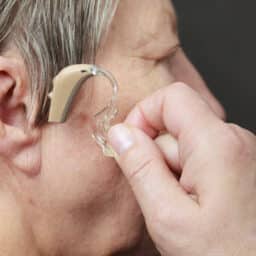
A frequent question asked by patients being fit with hearing aids is whether the hearing aids will make the loud noises too loud. Fortunately there is a comforting answer to this question.

The simple answer is that present day hearing aids will NOT increase sounds which are already excessively loud, thus possibly harming the user’s hearing even more, as long as they’re correctly fitted and adjusted. The key phrase in bold type is the reason why you should seek the help of an audiologist.

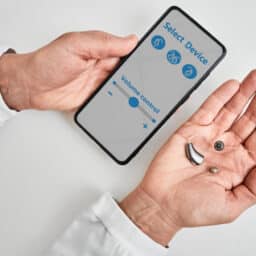
The more complex answer has to do with the nature of modern digital hearing aids themselves, and how they work. Digital hearing aids work by transforming sounds into data. The data which encodes the sounds is then processed in the hearing aid’s microchip before the amplified sound is delivered to your ears. Your individual needs can be achieved with these digital hearing aids by programming and adjusting the maximum volume and the quality of sounds. If you have primarily high-frequency hearing loss, for example, we might program the hearing aid to amplify those sounds while reducing the volume of lower-frequency sounds. On the other hand, if you suffer from low-frequency hearing loss, the hearing aid settings would be reversed.

In addition, modern digital hearing aids are able to filter the sound with the goal of producing a clearer signal. This may make it easier for you to hear voices in the foreground because the hearing aid can detect and amplify those voices while suppressing the noises in the background. The hearing aids can also be adjusted to dynamically compensate for differences in volume; if the speaker or music you are listening to starts softly but then increases and becomes too loud, the hearing aid can adjust for this. This process is aided by directional microphones that can detect where sounds are coming from and thus reduce the volume of background noise coming from behind or to the sides while increasing the volume of sounds coming from in front of you.

An important point to remember is that hearing aids will not protect your ears from loud sounds like earplugs do. Loud sounds like chainsaws or overly amplified rock concerts, will therefore still be able to cause noise-induced hearing loss. Properly fitted and programmed, your hearing aid should not only provide you with improved hearing but will also not put you at risk for greater hearing loss.

How Audiologists Categorize Hearing Impairments

Hearing loss may arise in many different forms and from several different causes. In order to best understand your hearing, it is essential to understand the process of hearing.

We pick up sounds through the outer ear, which is not just the part of the ear on the outside of our heads, but also the eardrum and the ear canal. The middle ear includes the eardrum and ossicles (three tiny bones that transform sound vibrations into information and convey them to the inner ear). Lastly, the inner ear comprises the cochlea (a tiny, snail-shaped organ), three canals with a semicircular shape that are critical to our sense of balance, and the acoustic nerves, which convey the auditory signals to the brain. All aspects of the ear are sophisticated and fragile. Damage in any of the three sections – outer, middle or inner ear – can cause hearing problems. There are four different classifications that make up what is collectively called “hearing loss.”

The first class is conductive hearing loss, that is generally caused by a blockage or interference which prevents sounds from being transmitted through the outer or middle ear. Conductive hearing loss is frequently treatable using medication or with surgery, and if neither is effective, it is managed with hearing aids.

The second classification is sensorineural hearing loss, which is caused by damage in the inner ear – to the cochlea, either to the hair cells lining the inner ear, or to the acoustic nerves themselves. This type of hearing loss is often permanent.  Hearing aids are usually the best option for treating sensorineural hearing loss.

Suffering from both conductive and sensorineural hearing loss is called mixed hearing loss and is generally treated with a combination of medication, surgery, and hearing aids.

Central hearing loss occurs when sound enters the ear normally, but because of damage either to the inner ear (especially to the cochlea) or to the auditory nerves, it cannot be organized in a way that the brain can understand.

All hearing loss classifications include sub-categories for the degree of hearing loss and are classified as mild, moderate, severe, or profound. Hearing loss is typically classified with additional sub-categories including whether the hearing loss occurs in one or both ears (unilateral vs. bilateral), whether the degree of hearing loss is the same in both ears (symmetrical vs. asymmetrical), or whether the hearing loss occurred before or after learning to speak (pre-lingual or post-lingual). Hearing loss can also be categorized as having occurred slowly or gradually (progressive vs. sudden), whether the degree of loss changes and gets better at times or stays the same (fluctuating vs. stable), and whether the loss was present at birth or developed later in life (congenital vs. acquired). If you suffer from any of these forms of hearing loss, our audiologist can help  diagnose the loss and make appropriate recommendations for treatment and/or rehabilitation.

Anticipated Battery Performance for Hearing Aids

The question of precisely how long hearing aid batteries should be expected to last isn’t as simple to respond to as it seems, because battery life is dependent upon many factors. Battery life depends on the model of your hearing aid, and may vary widely even in unique models created by the same manufacturer. The actual life of a hearing aid battery also depends on the length of time each day that the hearing aid is powered on. As you would expect, the more you use your hearing aid, the faster the batteries will be used up.

The batteries themselves are a key factor. Batteries the exact same size from different manufacturers will have different lives. And there will be variation within one battery manufacturer if they offer premium or extended-life lines. Battery type is another key factor in longevity. For example, zinc-air batteries will start to burn stored energy the second you remove the tab on the bottom and will continue to lose charge even if the hearing aid is turned off while other battery types will only drain when they’re inside a hearing aid that is turned on.

If considering new hearing aids, it’s a wise idea to do some research on the different models and the types of batteries they use to help you determine the best choice. The same research suggestion holds true if you have an existing hearing aid and are looking for the batteries with the longest life for it; you can learn a great deal from consumer ratings and comparative reviews.

Hearing aid manufacturers have worked to make things simpler by standardizing their sizes and using specific color codes for each size which is the same for every manufacturer. The times listed below for each size are approximations, but will give you a general idea of how long hearing aid batteries of each size should last given standard use:

  • #10 – Yellow tag – 80 hours
  • #13 – Orange tag – 240 hours
  • #312 – Brown tag – 175 hours
  • #675 – Blue tag – 300 hours


For the longest battery life, remember to turn your hearing aid off when you’re not wearing it. And to ensure batteries you’ve already bought but haven’t used yet stay fresh and retain their power as long as possible, store them indoors in their original unopened packaging, and at room temperature.

Should I Wear 1 or 2 Hearing Aids?

“Should I use 1 or 2 hearing aids?” This is a fairly common question considering hearing aids are a considerable investment. The advice provided by nearly all audiologists  is that the advantages of using 2 hearing aids outweigh the difference in cost.

There are a few exceptions to the rule, including the following:

If your hearing is normal in one ear, you most likely do not need a second hearing aid for that ear. Also, if you have completely lost your hearing in one ear, wearing a hearing aid in that ear is not going to be effective (however, there are some devices that help provide awareness of hearing on the non-hearing side that require a device to be worn on the dead ear). If you are prone to recurring ear infections, wearing hearing aids can potentially make the situation worse, so wearing a single aid might be an advantage.

The case for wearing two hearing aids has been validated by research suggesting that your auditory nerve has a “use it or lose it phenomenon,” meaning the more consistent stimulation you provide your auditory system, the better your system will function. Additionally, binaural hearing, or hearing with two ears, is necessary in order to localize where sounds are coming from. This not only has safety implications but also translates to improved hearing performance in noise. Surveys also that indicate that most hearing aid users prefer wearing two aids to one. Two hearing aids greatly enhance your ability to perceive the source of the sounds you hear, and provides a more realistically balanced sound.

If you have hearing loss in both ears, wearing two hearing aids will enable you to keep stimulating both ears, whereas wearing only one can allow the other ear to deteriorate further from lack of use. For those who experience tinnitus in both ears or centrally, two hearing aids are almost always the wisest choice because the hearing aid is used to mask the ringing or buzzing sounds associated with tinnitus. Without the second hearing aid, one may continue to hear sounds in the other ear. Lastly, clinical studies and customer surveys have shown that users find wearing two hearing aids much less tiring than wearing only one.

The facts for wearing two hearing aids verify it’s benefits over wearing only one. If you are unsure about whether 1 or 2 hearing aids are appropriate for you, please contact our office for an evaluation with one of our audiologists.

The Hearing Aid User’s Guide to Choosing Cellular Phones

In the past, hearing aids have not always worked effectively with cellular phones, mostly secondary to electronic interference between the two devices that triggered static, squealing noises, or intermittent reception. Technology enhancements, along with new regulations, have mostly eliminated this problem. Today cell phone – hearing aid compatibility is no longer the problem it once was. Federal regulations have mandated new labeling requirements, and there are now ratings that help consumers easily find a cell phone that works well with a hearing aid.

The first thing to understand is that most hearing aids operate in two different modes – microphone or “M” mode, and telecoil or “T” mode. In M mode, a hearing aid uses its built-in microphone to pick up audible sounds from the environment and amplify them so that you can hear them. In T mode, the hearing aid instead uses an inductive process to pick up electromagnetic signals inside the phone directly, without the need for a microphone. Roughly 60 percent of all cell phones sold in the U.S. have a telecoil (T) mode.

Under the new regulations, these two modes of operation have ratings that range from 1 (the lowest sensitivity) to 4 (the highest sensitivity). To be labeled as hearing aid compatible (HAC) a cell phone must carry a minimum rating of M3 or T3.

Hearing aids themselves also carry M and T ratings to indicate their sensitivity and ability to block interference in each mode. To determine the compatibility between your hearing aid and a mobile phone you are considering, just add the M and T ratings together; add the M rating of the hearing aid to the M rating of the phone and add the T rating of the hearing aid to the T rating of the phone. If you get a combined total of 6 or more, that is thought of as excellent, a combination of hearing aid and phone that will be highly usable. If the combined rating is 5, this combination is considered normal and suitable for most regular phone use. If the combined rating is 4, this is thought of as acceptable but not very usable if you make a lot of extended phone calls.

This combined rating system makes it easy to shop for a mobile phone online, because it easily allows you to determine how compatible it will be with your hearing aid. In the end, nothing beats a real world test so you may want to wear your hearing aid to the cell phone store and test out a few different phone in real conditions. If you have questions regarding the cell phone compatility of your current hearing aids or of new hearing aid technology, please consult with one of our audiologists who would be happy to assist you.